The Seven Tenets #5: Encourage Diversity
My herb garden, which encompasses about 150 square feet, has 24 different species of plants, most of which have small flowers that attract pollinators and predatory insects. This garden sits adjacent my raised beds where I grow my vegetables. I have other small beds of flowering plants around my property for the same purpose. After several seasons, I’ve noticed my aphid populations have declined dramatically. In fact, insect problems in general are minimal in my garden. I attribute this to a healthy ecosystem of beneficial bugs that keep the pest populations in check.
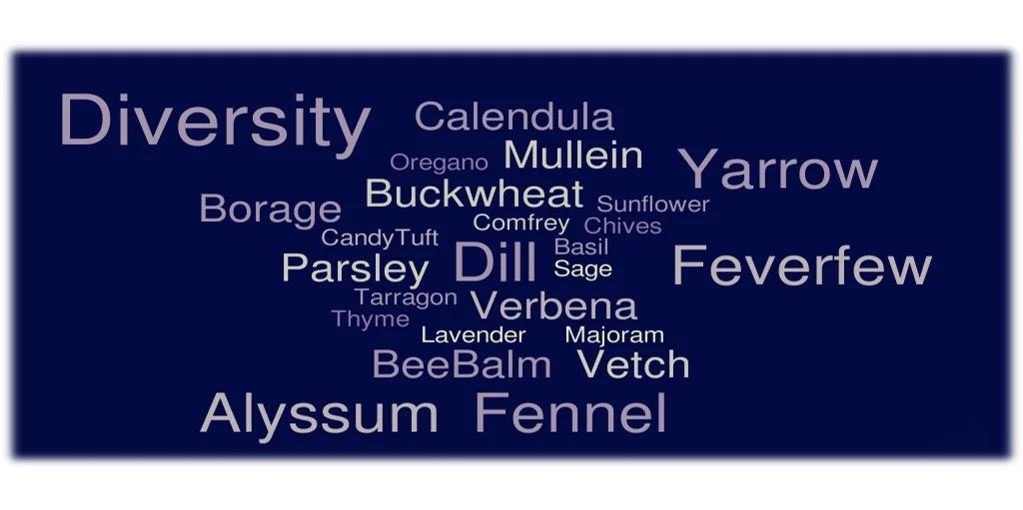
A large variety of herbs and flowers in my garden creates diversity.
It is important to keep as diverse of a landscape as possible to maintain a healthy and stable ecosystem. This strategy applies both above the ground and below the ground. Although the science is still murky, soil biologists are now beginning to see the importance of diversity in the landscape to nutrient (carbon) cycling and overall land productivity. The greater the diversity, the greater the number and variety of soil organisms:
“Many soil biological functions emerge from the complex interactions of soil organisms and are not predictable by adding up the activity of individual soil organisms. How well the soil community performs each of these functions depends in part on the complexity of the biological community. Complexity is a factor of both the number of species and the different kinds or functions of species. Greater complexity may imply more diversity of functions and more redundancy of functions, and therefore more stability.” -- (USDA Natural Resource Conservation Service “Soil Biology and Land Management.”)
In permaculture, there is a concept called “multi-function” stacking, which involves plants that provide multiple benefits at once. Red clover is a great example as it provides mulch (living or cut as organic matter), habitat and nectar for beneficial insects, and it fixes nitrogen and helps build soil structure. A single, mature oak tree on your property provides shade to cool your house; it creates food and habitat for wildlife; it mitigates the wind; purifies water; builds soil; pumps oxygen into the atmosphere; sequesters carbon; and provides you with an endless supply of superior mulching and compost material.