What is an Heirloom Tomato Anyway?
There roughly 10,000 varieties of tomatoes documented today, with over 3,000 of those being open pollinated. Open pollinated simply means a tomato plant that is left to pollinate naturally, as opposed to being deliberately crossed with another variety to create a hybrid. The tomato flower is unique in that it contains both sex parts so that it is self-pollinating. Its structure is also such that inadvertent cross pollination with another variety growing nearby is unlikely. These two factors mean that open pollinated varieties readily produce fruits and seed with the exact same genetic material as the parent plant. All heirloom tomatoes are open pollinated, however not all open pollinated tomatoes are heirlooms.
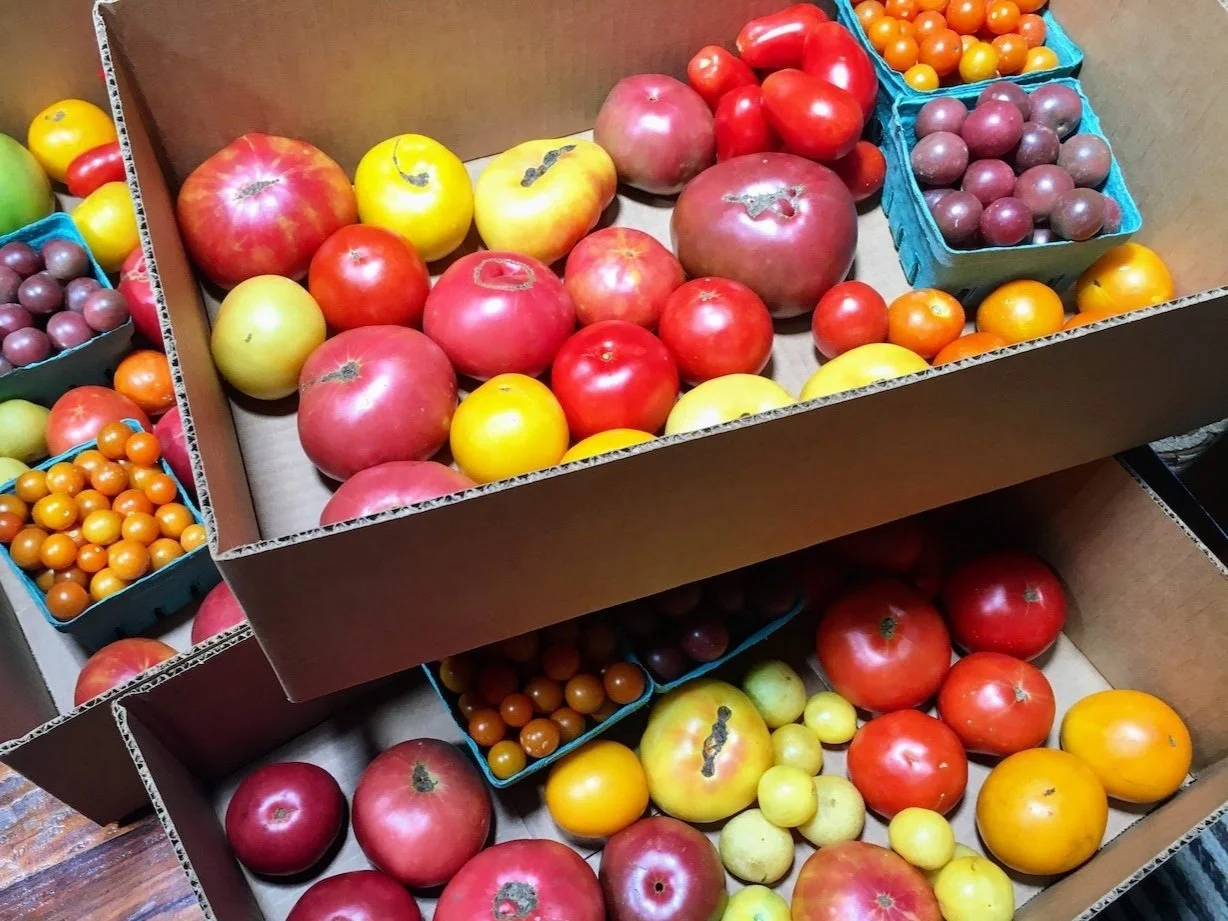
Heirloom tomatoes ready for delivery
“Heirloom” refers to thousands of varieties of tomatoes that have been carefully selected over time for quality and taste, and genetically stabilized through generations by farmers and home gardeners. The genetic diversity of heirlooms finds its way into today’s common hybrid tomato varieties.
Dr. Carolyn Male , a go-to authority on this subject, provides three primary definitions for heirloom tomatoes in her book “100 Heirloom Tomatoes for The American Garden”.
“Commercial Heirlooms” are open-pollinated varieties introduced before 1940, or tomato varieties more than 50 years in circulation. These heirlooms pre-date the modern hybrid era.
“Family Heirlooms” come from seeds that have been passed down for several generations through a family and these may or may not be commercially distributed today.
“Created Heirlooms” start with a genetic cross of two known parents (either two heirlooms or an heirloom and a hybrid) whose successive generations of seeds have been selected, or “dehybridized,” for as many generations that it takes to achieve and stabilize the desired characteristics. This can sometimes take 10 years or more.
So genetically speaking, heirlooms have been selected over many years for specific qualities or traits and eventually stabilized so that the seed from one year will produce the exact same plants and fruit the next year: The offspring are theoretically identical to the parents.
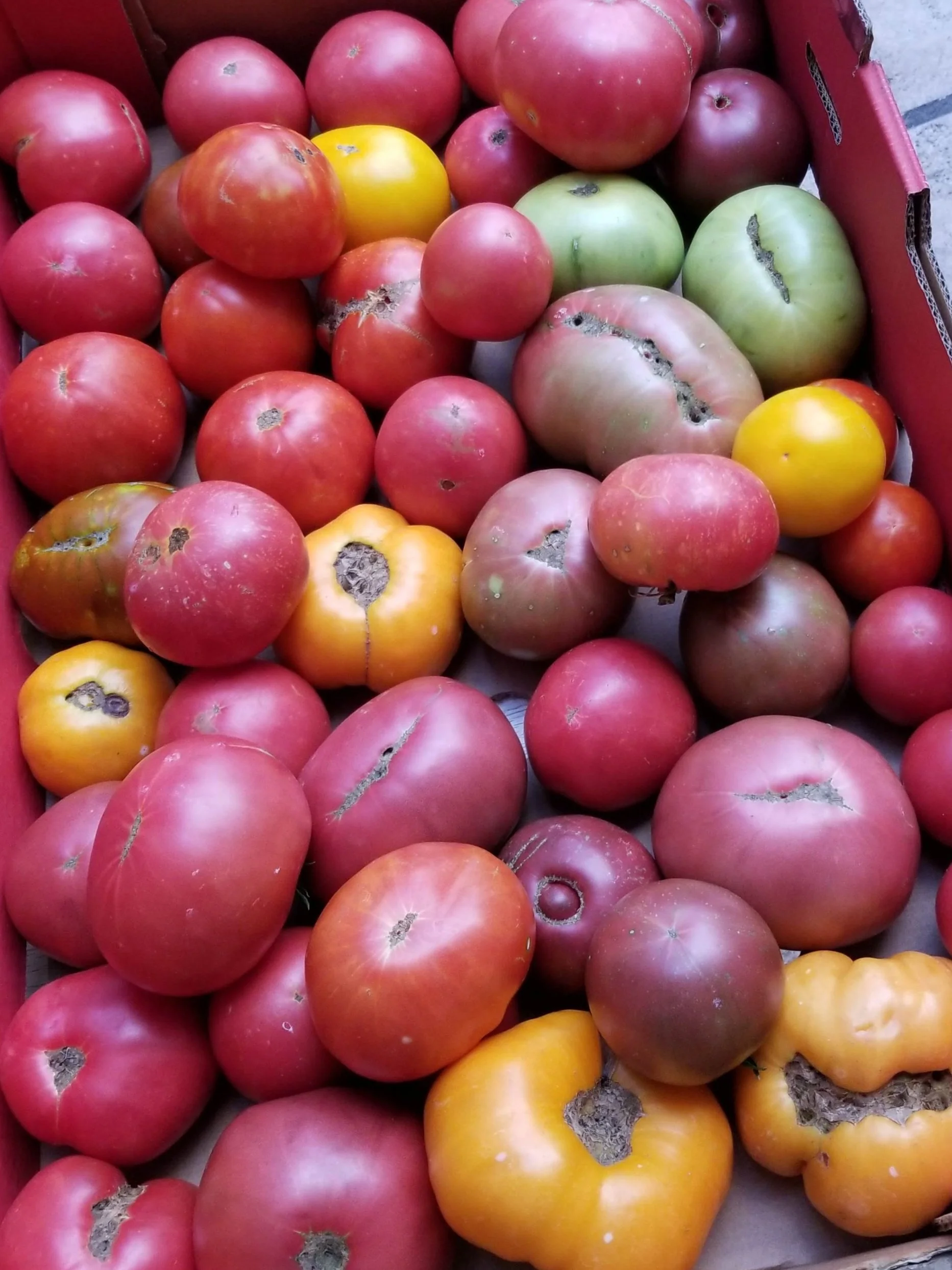
My twenty or so years of experience have told me which heirloom tomato varieties are top performers in terms of vigor, disease resistance, yield and quality. Some people are of the opinion that heirlooms are not worth growing because they require extra care and they don’t produce yields like hybrids. Furthermore, they say, heirlooms have very thin skins and short shelf lives, so they don’t submit to modern-day agricultural conventions such as mechanical harvesting and shipping. This is all true, and it requires extra work and care to grow heirlooms. But the critics have not spent enough time exploring the huge diversity of these varieties to understand the true value of heirlooms. I would submit to these critics that the right selection of properly grown heirlooms in great soil can produce just as well as hybrids and these gorgeous tomatoes offer significantly more beauty, versatility and flavor than their hybrid competitors. They also command a significant premium when it comes to price.